
Document automation services for B2B teams
Generate letters, forms, reports, and other recurring documents from structured data without retyping the same information again and again. The result is consistent output, batch generation, and a review process that stays easy to manage.
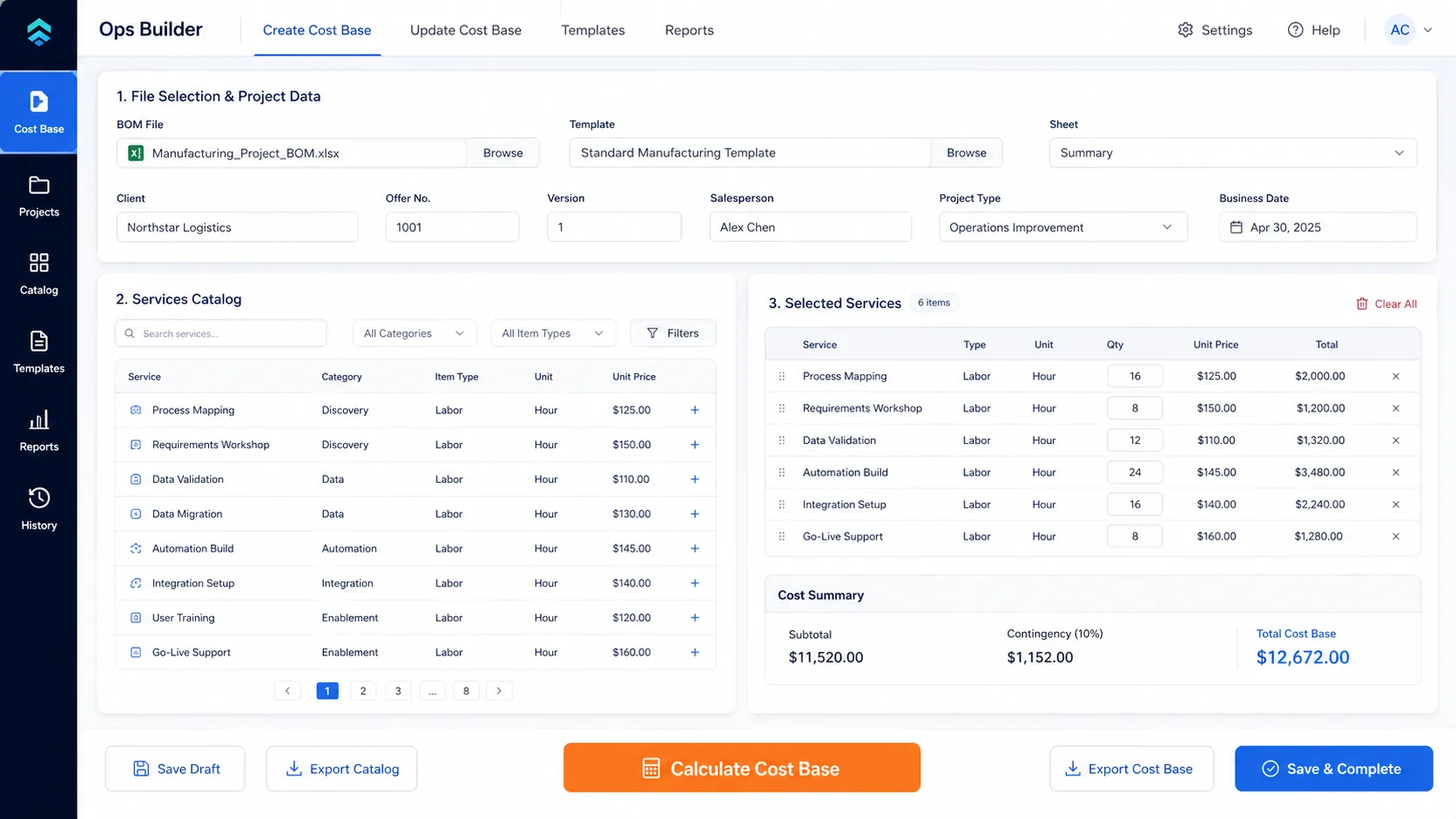
Typical use cases
Letters, forms, reports, contracts, and recurring business documents that need to stay consistent.
What changes
One data source becomes many consistent outputs with less manual editing and less room for mistakes.
Best fit
Teams that generate the same documents repeatedly with different variables, approvals, or output formats.
How document automation usually works
The usual pattern is simple: structured inputs enter the system, templates are filled, approvals happen when needed, and the final document is delivered in a consistent format.
Gather the data
Pull details from forms, spreadsheets, CRM records, or a structured request.
Map it to the template
Variables are filled into the right fields so the document reads naturally and stays consistent.
Review or approve
If the workflow needs human review, the output pauses at the right handoff point.
Export the result
The final document is delivered in Word, PDF, or the format your team uses internally.
Where document automation helps most
The common theme is repetition. Once the same document structure appears again and again, automation usually pays back quickly and keeps the output cleaner.
Questions people usually ask
What does document automation replace?
Yes. We usually start with one document family, then extend the same logic to related templates.
When is document automation worth it?
That is usually still a good fit if the structure is repeatable. The logic can be updated without recreating the whole workflow.
Can this stay controlled and private?
Not necessarily. The workflow can stay inside a private runtime with only the required outputs leaving the system.