
Business process automation services for B2B teams
Replace the repetitive work your team keeps doing by hand with structured applications that save time, reduce errors, and keep the logic visible and easy to maintain. These are the patterns B2B teams usually need first.
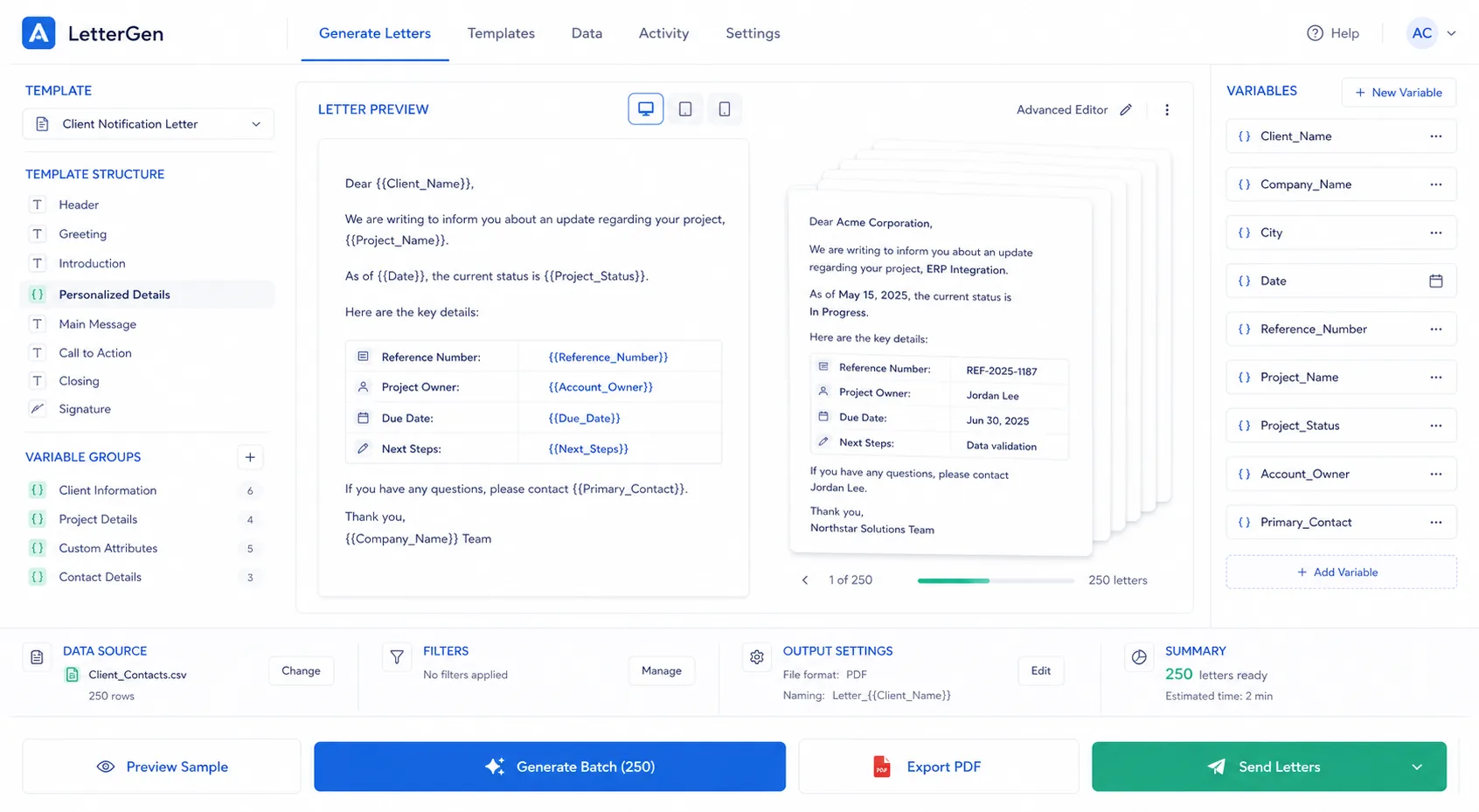
Clean handoffs, fewer mistakes, and repeatable work
Common inputs
Forms, spreadsheets, inboxes, ERP data, CRM records, and recurring requests from internal teams.
Common outputs
Updated records, routed tasks, generated documents, and a clear trail when something needs review.
Why it matters
Manual operations cost time every week and start to break down as volume grows or handoffs get messy.
How business process automation is typically structured
The usual starting point is one repeatable process. From there we add rules, logging, and handoffs so the work can scale without turning into a maze of manual exceptions.
Capture the trigger
A form, inbox, spreadsheet update, or CRM event starts the workflow.
Apply the business rules
The workflow normalizes inputs, checks conditions, and routes the task to the right path.
Produce the output
The system generates a document, update, or handoff that your team can review quickly.
Keep it traceable
Logs, retries, and handoff notes keep the workflow understandable when something changes.
Where this usually delivers the most value
These are the kinds of workflows where manual effort repeats often enough that a reliable system pays for itself quickly.
Questions teams usually ask
What do business process automation services usually replace?
Usually no. We target the repetitive workflow first and keep the rest of the stack intact where possible.
When is custom automation a better fit than no-code?
Yes. Private execution and controlled data flow are part of the default architecture whenever the use case needs it.
What outcomes can teams expect?
A fixed-scope automation with a clear path from trigger to output, plus enough traceability for maintenance.