
Agentic AI automation services for B2B operations
Design bounded AI systems that can use tools, preserve state, request approval, and leave a trace for every important handoff.
01 / OBSERVE
Read the signal
Collect the context before the system acts.
02 / PLAN
Pick the next step
Keep the workflow reasoned and explicit.
03 / REVIEW
Keep humans in control
Pause where the decision matters most.
Signal 01
What it replaces
Unbounded prompt chains, opaque tool calls, and AI actions that have no approval boundary.
Signal 02
How we build it
We design a small app or service layer around the workflow, connect the right systems, and keep the logic explicit.
Signal 03
Typical fit
Teams that need bounded tool use, explicit approvals, traceable state, and a clear stop condition.
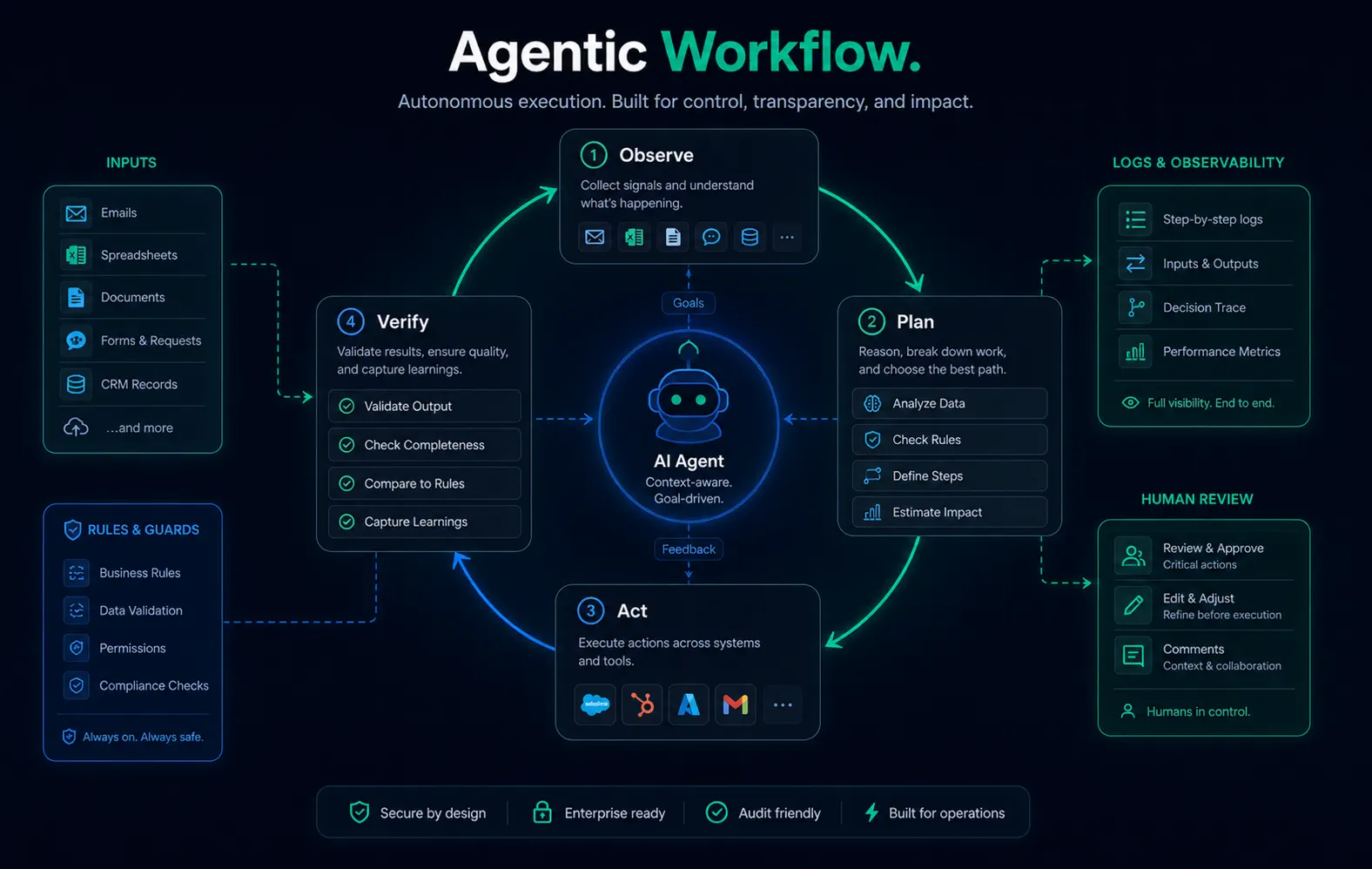
How an agentic workflow is typically structured
Controlled AI assistance works best when the workflow keeps explicit steps, so the system can help make progress without losing visibility or control.
Step 01
Start with a trigger
A request, message, or record change starts the workflow.
Step 02
Let AI assist carefully
The model helps classify, draft, summarize, or decide within guardrails.
Step 03
Keep human review where needed
Sensitive or high-impact steps can pause for review before the system continues.
Step 04
Record the handoff
Logs and traceable state make the workflow easier to support and improve later.
Where this can be useful
The value is in using AI where the extra reasoning helps move work forward, not in replacing every workflow with a model.
Questions teams usually ask
Do we need a full AI agent platform?
Usually no. We keep the implementation small and only add the AI pieces that actually help the workflow.
Can the workflow still be predictable?
Yes. Predictability comes from clear boundaries, logs, and controlled handoffs rather than from AI making every decision freely.
Where does human review fit in?
We insert review points where the decision matters, then automate the repetitive steps around them.