
Proposal automation services for B2B teams
Turn CRM data and structured inputs into review-ready proposals faster than manual editing. It works well when quotes, renewals, and package changes keep repeating.
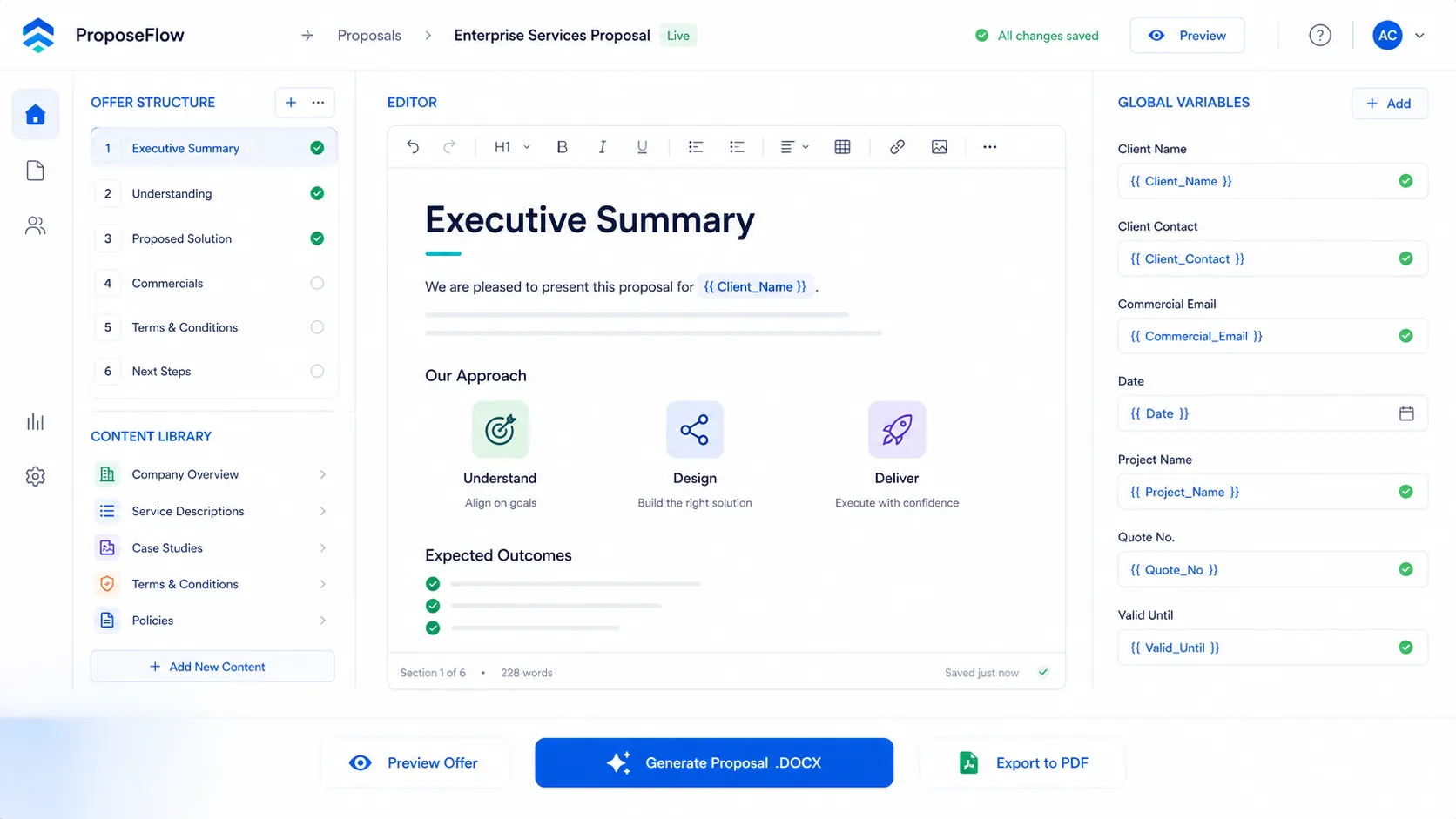
Before automation
Teams keep copying text from older proposals, updating names and pricing by hand, and fixing the same formatting over and over.
After automation
Proposals start from structured data, stay consistent, and are much easier to review before they go out.
Best fit
Teams that produce quotes, renewals, or service offers often enough that speed and consistency start to matter.
How proposal automation usually works
The goal is to turn repetitive offer assembly into a controlled pipeline, where the team can start from CRM data and end with a review-ready proposal quickly.
1. Pull the source data
CRM fields, account details, and scope inputs enter the workflow.
2. Build the structure
The workflow inserts the right sections, pricing blocks, and terms into the proposal template.
3. Review and adjust
The team checks the output, makes edits where needed, and approves the final offer.
4. Deliver consistently
The result is a proposal that stays aligned with the brand and is easier to repeat at scale.
Real-world scenarios
Proposal workflows that usually benefit from automation
These are the proposal patterns that usually start in spreadsheets and docs, then become worth automating once speed, consistency, and traceability matter more than one-off manual edits.
Deal desk proposals
Teams can pull scope, pricing, and account data into a proposal structure without re-copying the same details for every new opportunity.
Renewals and expansions
Recurring clients need faster revisions, updated terms, and clear version control when a proposal changes from one cycle to the next.
Service estimates and packages
When the offer is assembled from reusable modules, automation keeps the output consistent and makes review much easier.
What this is best at
Proposal work is a strong fit when the team repeats the same assembly process over and over with only a few changing fields and a lot of review pressure.
Questions teams usually ask
What does proposal automation replace?
Yes. In most cases we adapt the workflow around the current template structure instead of replacing it.
What data usually feeds a proposal workflow?
The workflow can pull pricing from structured logic so changes happen in one place instead of inside every document.
Why automate proposals with custom code?
Yes. It reduces preparation time so the team can spend more time on review, positioning, and closing the deal.
Ready to automate?
Book a free diagnostic and we'll map your bottleneck.
Review Your Proposal Workflow